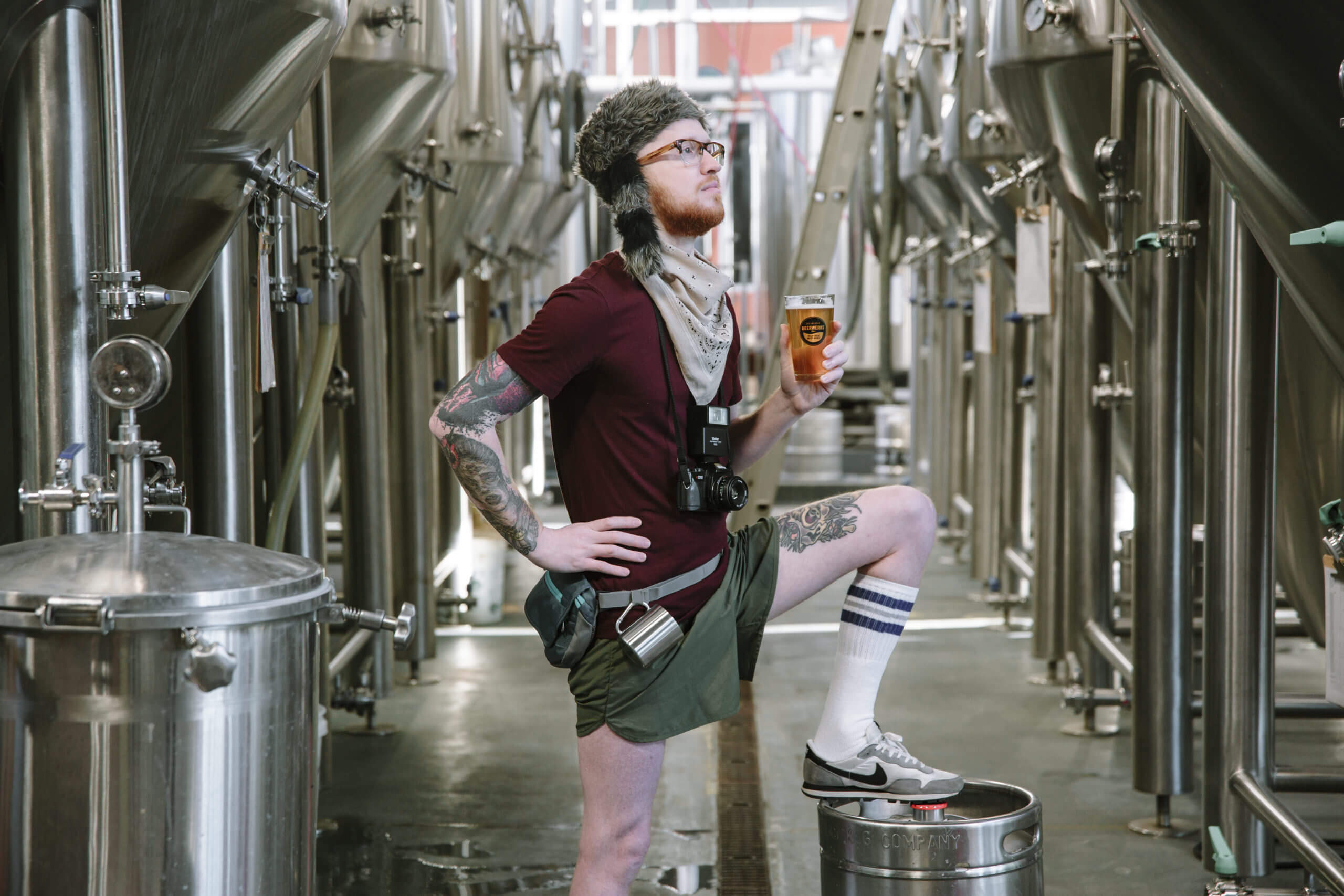
Some anthropologists theorize humans were first motivated to form permanent civilizations to grow enough grain to brew lots and lots of beer. While there’s no proof, we do know beer has been an important part of the human experience for at least 5,000 years. Today, beer is alive and well, both in mass-market cases on the supermarket shelves as well as in your pint and flight glasses at Beerwerks Trail craft breweries. Here’s how those products are different.
Beer Background
Early beer was flavored with an herb mixture called “gruit.” Geographical and environmental factors led to a variety of styles, but beer was generally dark, cloudy, and consumed at “cellar temperature” close to home. By the late Middle Ages, brewers were adding hops, an excellent natural preservative that made beer easier to store and transport, leading to larger brewery operations.
The Industrial Era modernized the industry with steam power and refrigeration, which were crucial to year-round beer production and even wider distribution. In the 1840s brewers started using lager yeasts to produce light, bright, longer-lasting beer (which could be appreciated through the first affordable glassware). Mainstream tastes shifted, and by the time U.S. Prohibition was repealed in the 1930s, the American beer industry consisted of large commercial breweries generally favoring lighter one-size-fits all flavor profiles.
It was only at home that beer lovers could experiment with recipes and flavors, including bolder uses of hops. Legalized homebrewing in 1978 led to the first craft breweries in the 1980s. Modern craft brewing rejects mass-market beer, shifting its focus to more flavorful, varied, and experimental styles using local ingredients, smaller brewing systems, and considering community and sustainability when developing their product.
How Is Beer Made?
Beer is made from water, malt (grains), hops, and yeast. Water provides the volume, malt provides the sugar and color, hops provide aromas and balance the sweetness with bitterness, and yeast provides the chemical reaction by eating the sugar and producing alcohol and carbon dioxide (fizziness).
Brewers mill malted grain and mix it with hot water in a temperature-controlled mash tun until enzymes convert the grain’s starches to fermentable sugars in a sweet liquid called wort. The wort is separated from the grain and boiled for sterilization. At various times during the boil, brewers add hops to balance the sweetness and add flavor. Next, brewers cool the flavored wort, add yeast, and move it to a fermenter, which manages temperature and prevents contamination while the yeast does its work. This can take from a week to several months. As the beer’s flavor develops, brewers condition it, often filtering out solid particles and adding carbonation. Finally, they package it into kegs, cans, or bottles.
The Magic of Craft Brewing
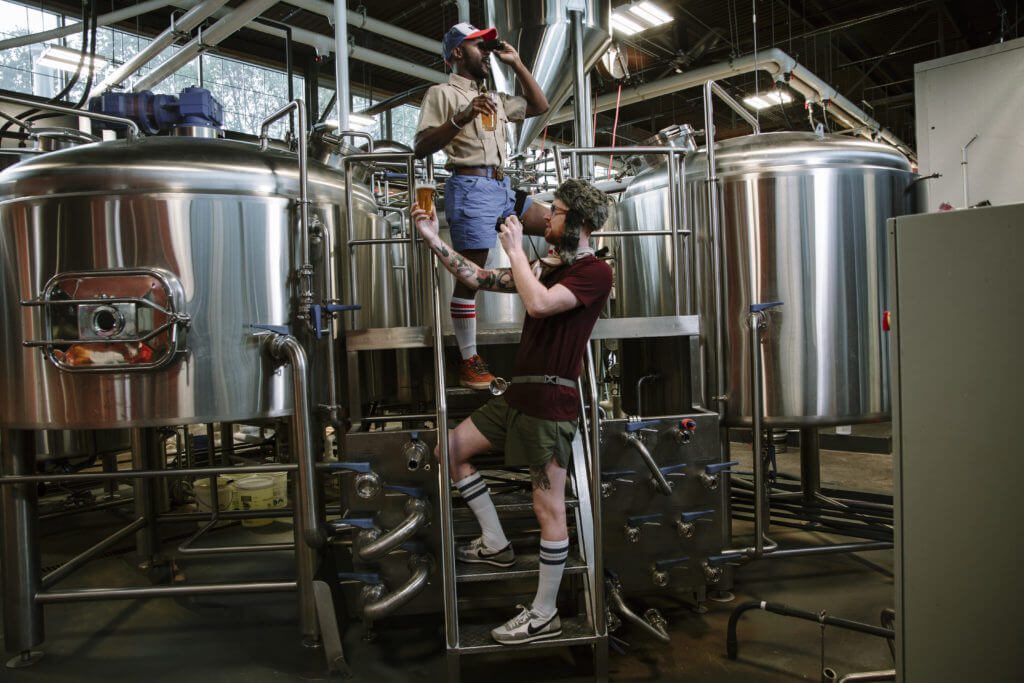
While all beer making incorporates these basic steps, a lot of magic can happen when brewers maintain creative control. Craft brewers can experiment with small batches, using a wide variety of recipes and styles and manipulating flavors with time, temperature, pH, and non-traditional ingredients. They can taste the products and tinker with the recipes. Here’s what some of the Beerwerks brewers are doing.
- Great Valley uses local malt and incorporates farm-grown ingredients, such as grapes and herbs into select beers.
- Heliotrope ferments its wild beers with a “mixed culture of yeast and souring bacteria (known as “The Ocho”) that we foraged in the wild from right here in Rockbridge County.” And want to know how to seal beer in a can? Here’s Heliotrope’s new canner!
- Stable Craft grows and harvests its own hops. Many of its brewery practices like water reclamation are guided by an interest in sustainability.
- Basic City credits stainless steel and the “pristine essence” of waters tapped from a local aquifer for adding “hue, flavor and effervescence” to their beers.
- A small-scale 1-bbl (one-barrel) brewing system can produce 31 gallons of beer per batch. Three Notch’d Valley Collab House uses one for all its specialty brews, which allows the creation of fun, unique beers.
- The Friendly Fermenter also uses a 1-bbl system, which allows freedom to use creative ingredients and experiment with a lot of different beers, which are always fresh.
- Cave Hill uses a 10-bbl three-vessel system with five 10-bbl fermenters and two 10-bbl bright tanks. They brew one or two times a week to supply the in-house taps.
- Feel the Rain Brothers Craft Brewing’s 15-bbl system feeds 30-bbl and 60-bbl (over 1,800 gallons) fermenters. Check out this Mash Tun to Boil Kettle to Ferment Tank video.
See the Brewing Process Firsthand
Stable Craft’s Be a Brewer for a Day Experience
- Guests learn the “art and science of creating craft beer” as they work alongside a professional brewer in Stable Craft’s Be a Brewer for a Day Experience. The 2-3-hour sessions include a brewery tour with in-depth explanations of the tools and process. There’s also a planning session with the brewmaster and hands-on experience covering milling and wort production or boil, transfer, and cellaring operations. Since the entire beer-making process takes about 45 days “from milling to chilling,” guests won’t get to toast the day with the exact brew they helped make. Fortunately, the experience includes a flight or pint from the Stable Craft taps.
- For a less intensive look at the facility, you can also book a Saturday afternoon Sustainable Farm & Brewery Tour for a behind-the-scenes look at farm and brewery operations. You’ll stroll the farm, learn about raw ingredients and brewing, and see Stable Craft’s sustainability practices in action. The 45-minute tour also includes a beer and souvenir glass.
Other Interactive Brewing Experiences
- Queen City Brewing started as a brew-on-premise brewery. Now you can sample from over two dozen beers on tap, brew your own (with professional guidance) from a big collection of recipes, or attend a Saturday session of the Brewer’s Apprentice program, where you shadow the brewer to watch and ask questions about the brewing process.
- The Friendly Fermenter offers a 90-minute 3-T Experience (Tasting, Teaching, and Tour) for groups. You’ll learn the fundamentals of beer making, tour the nanobrewery, and taste the craft beers that are brewed there.
Tour and Explore
- White Oak Lavender Farm & The Purple WOLF Vineyard offers informative guided tours of the farm covering lavender cultivation, harvesting, and distillation of essential oils. You can also find out how lavender is incorporated into beer and other products. Guests can explore the gardens on their own, meet farm animals and take a self-guided audio tour, which delves deeply into farm and lavender history.
- Several farm breweries like Great Valley Farm Brewery & Winery and The Alpine Goat Brewery allow guests to explore the properties. Cave Hill Farm Brewery even has a farm museum and a scenic silo viewing platform.
- The brewing facilities at BrewHaHa Brewing Company and Pale Fire Brewing Company are adjacent to the taprooms. This allows visitors to check out the action and ask questions. And according to Heliotrope Brewery, Seven Arrows Brewing, and Three Notch’d Valley Collab House, they don’t offer scheduled tours, but if you’re curious to see more, just ask. Maybe you’ll get an unofficial look behind the scenes!
The next time you stop at a Beerwerks brewery, sample some different beers and ask about how they were developed. Take a moment to appreciate the brewers who have thoughtfully and lovingly crafted their beers to provide an alternative to mass-market flavors.